Catamaran vs Phinisi: Which One Truly Suits Your Group for a Komodo Trip?
If you find yourself weighing a catamaran against a phinisi schooner for an upcoming trip to Komodo, you are probably asking yourself a fundamental question: does the stability of a catamaran matter more to your group, or is it the distinctive, atmospheric character of sailing aboard a phinisi that you are truly after? This article sets out to examine the differences between these two vessel types in considerable depth, covering everything from comfort at sea and the particular rhythms of lounging on deck, to the routes that each is best equipped to handle. Armed with this information, you should be able to determine, with far more confidence, which vessel represents the ideal match for your holiday experience in Komodo.
Table of Contents
Key Takeaways
- Catamarans, owing to their twin-hull design, offer markedly greater stability, making them especially well suited to groups prone to seasickness, as well as those traveling with toddlers or elderly companions.
- Phinisi schooners, by contrast, offer a more characterful and evocative sailing atmosphere, complete with teak wood decking and golden-hour views that consistently rank among guests’ favorite memories.
- The lounging experience aboard each vessel differs substantially: catamarans feature resort-style sunbathing nets suspended between their hulls, whereas phinisi offer wooden decks and seating nooks formed naturally amid the rigging.
- Standard national park routes can generally be traversed with comfort aboard either vessel, though open-water crossings and overnight anchorages take on a distinctly different character depending on which you choose.
- To arrive at a well-informed decision, it is worth relaying your group’s specific composition to an experienced operator such as IndonesiaJuara Trip, including guests’ ages, any history of seasickness, and the number of cabins genuinely required.
Catamaran vs Phinisi: What Actually Sets Them Apart?
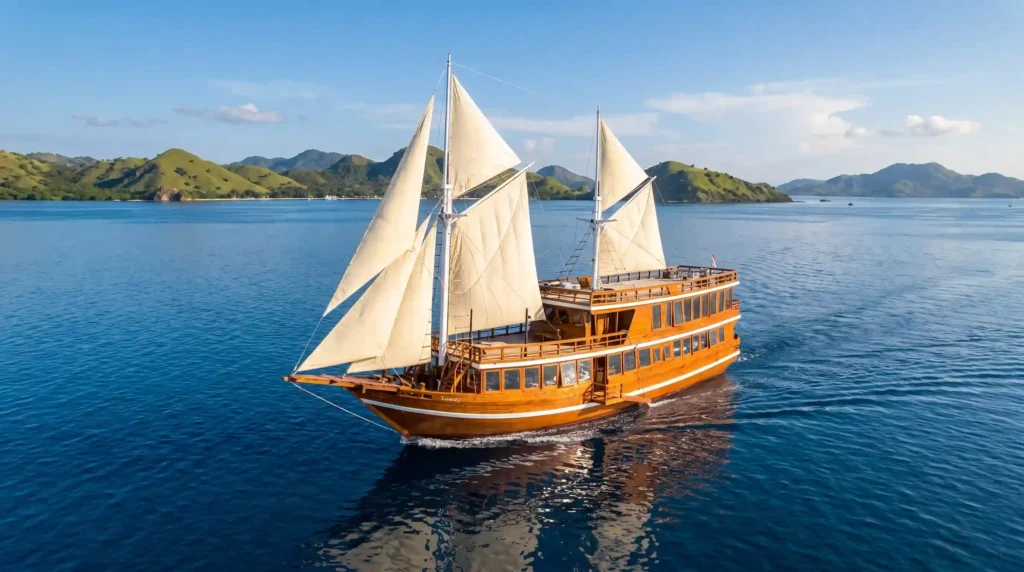
Before delving into which vessel might suit you better, it is worth first understanding precisely what distinguishes these two types of boats from one another. Is the difference simply a matter of hull shape, or does it run deeper than that? A catamaran rests upon two hulls, and this comparatively simple matter of physics ends up dictating nearly every facet of its character: lateral rocking is substantially diminished, the main deck remains spacious and level throughout, and the overall flow of the space evokes something closer to a floating apartment than a traditional vessel.
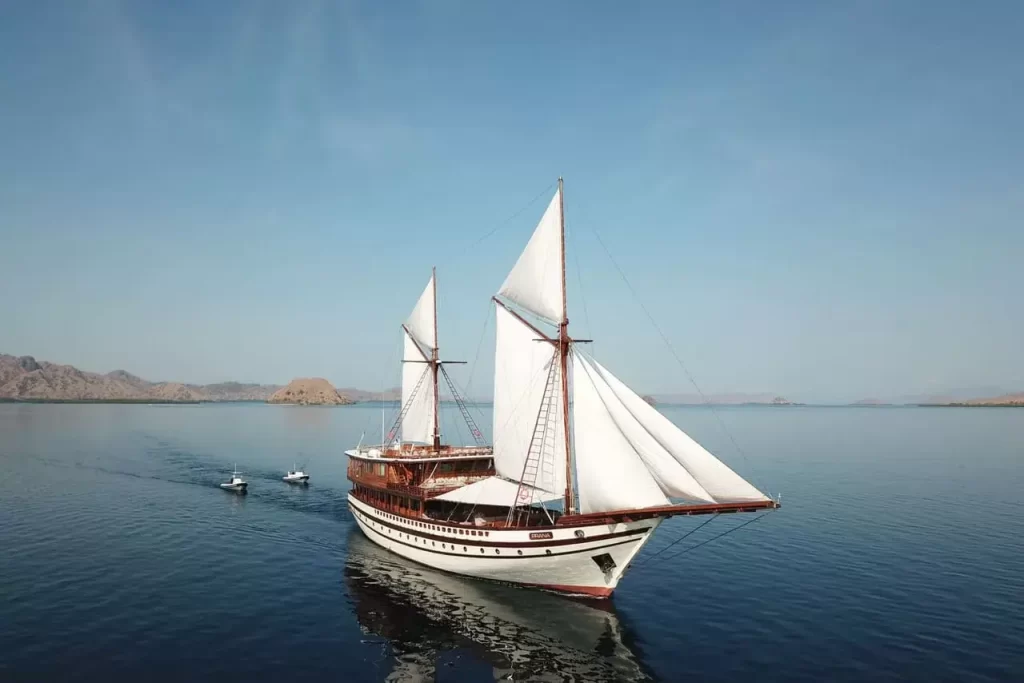
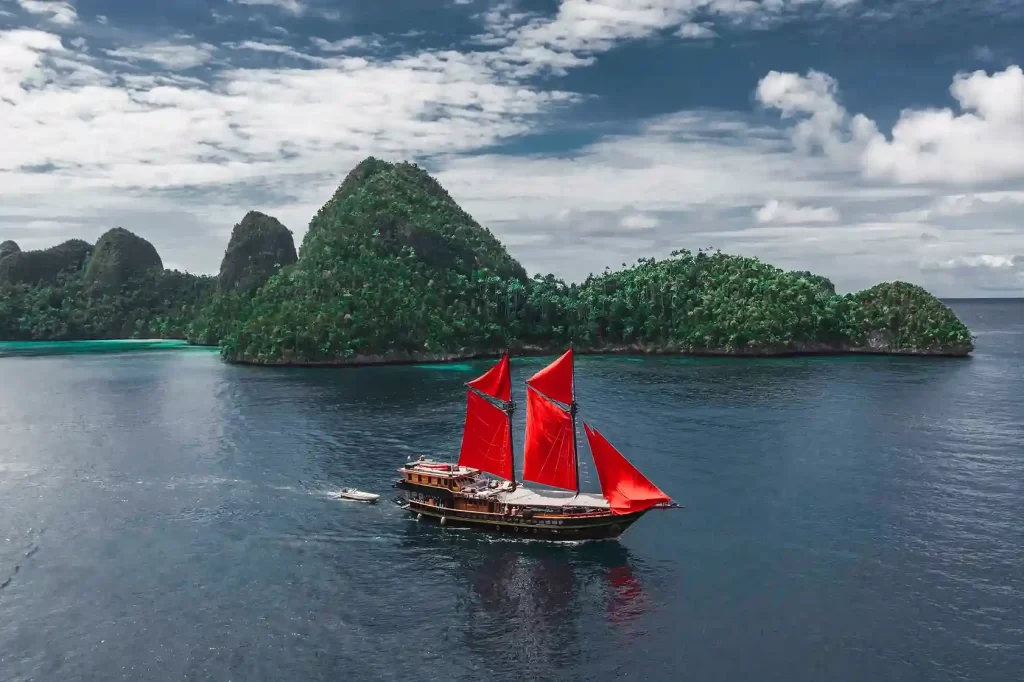
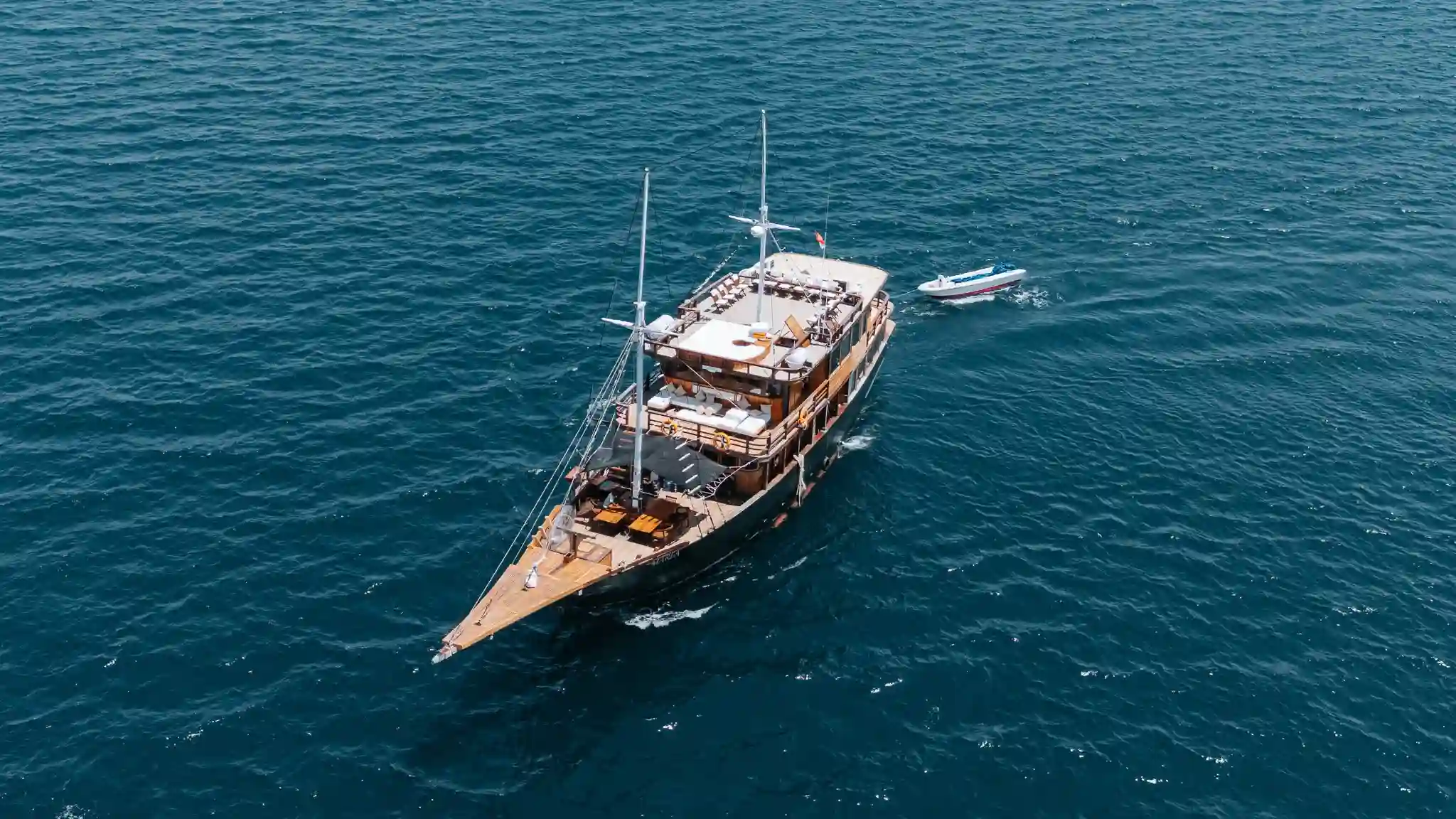
A phinisi, meanwhile, is typically built around a single wooden hull rigged with two masts, and its overall character follows naturally from that construction, whereas a catamaran tends to present a more contemporary sensibility, both in texture and in the form of the hull itself. Neither vessel is inherently superior to the other; rather, what exists is simply a divergence suited to differing needs among different groups.
Who Stands to Benefit Most From a Catamaran?
Should your travel party include anyone particularly susceptible to seasickness, or should you be bringing along toddlers or elderly relatives, you may well find yourself wondering which vessel would prove most accommodating for them. This, in fact, tends to be the single most decisive factor in many families’ deliberations: who, precisely, among your group, is most vulnerable? For those family members inclined toward seasickness, the twin-hull configuration of a catamaran offers a genuine and tangible reprieve; a great many of our guests who have carried unpleasant memories of previous sea voyages have returned from a catamaran trip pleasantly astonished to discover they felt entirely fine throughout.
For toddlers who have only recently mastered walking with any steadiness, a flat deck largely free of steps proves considerably more forgiving than the staircases one encounters aboard a phinisi. For grandparents, meanwhile, a short and gently sloped distance between cabin and dining area can mean the difference between participating fully in the day’s activities and spending long stretches waiting alone in the cabin. Healthy teenagers and adults, conversely, tend almost without exception to fall for the upper deck of a phinisi, where the single most coveted spot for the entire voyage turns out to be the netting and bow, a detail one is unlikely to find mentioned in any safety brochure.
Beyond questions of stability alone, the matter of lounging style constitutes a further significant consideration. Are you the sort of traveler who envisions something akin to a resort holiday, or does an atmospheric, story-laden voyage appeal to you more? The lounging styles offered by these two vessels could scarcely be more different from one another. Catamarans hold a decisive advantage for groups imagining a resort-style getaway: sunbathing nets strung between the twin hulls, where children are apt to while away entire afternoons; shaded outdoor seating areas; and a seamless, level transition between indoor and outdoor space.
Phinisi, meanwhile, hold the advantage for groups envisioning more of a genuine voyage: sun-warmed teak decking underfoot, seating nooks that seem to form of their own accord amid the tangle of rigging, and arguably the finest vantage point in all of Flores for witnessing golden hour, namely a west-facing upper deck, glass of young coconut water in hand. If the imagined photographs filling your dream holiday album consist of “family playing on the nets above brilliant blue water,” the twin-hull option is your answer. If instead they consist of “a sailing silhouette set against a fading sunset,” the answer, too, becomes self-evident.
Read more: Upgrading: When Open Trip Isn’t Enough Anymore and It’s Time for a Private Trip
Which Routes Are Best Suited to Each Vessel?
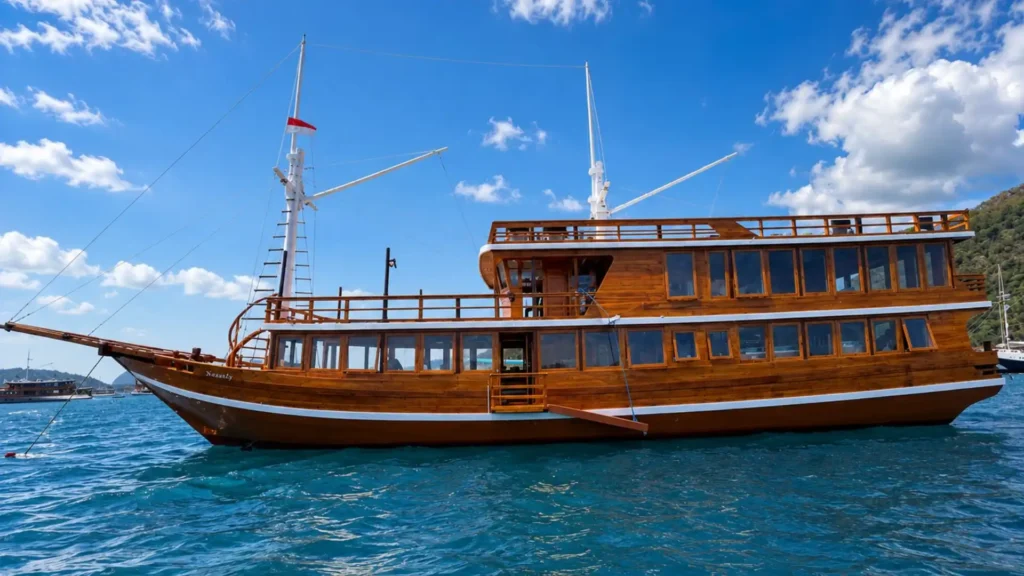
Having now considered the differences that present themselves on board, you might reasonably wonder whether the routes accessible to each vessel differ as well. Standard national park routes, encompassing destinations such as Padar Island, Pink Beach, Komodo or Rinca Island, Manta Point, and Taka Makassar, can generally be navigated with comfort aboard either vessel throughout the sailing season that runs from April through November. It is at the margins that meaningful differences begin to emerge. More exposed crossings, such as those heading westward toward Banta, tend to feel considerably more relaxed aboard a catamaran once the wind picks up.
Overnight anchorage within a tranquil bay, however, is precisely where a phinisi reveals its soul most fully: wooden cabin lights shimmering across the water’s surface, the entire vessel creaking softly, almost as though it were breathing. Should you wish for an itinerary weighted more heavily toward extended sailing and frequent changes of location, the Private Phinisi Charter Trip offered by IndonesiaJuara Trip can be tailored to your preferred route from the very outset of planning.
Essential Questions to Ask Before Choosing a Vessel
Whatever inclination you may have developed by this point in the article, the following five questions should serve to sharpen your decision considerably. What are the youngest and oldest ages represented within your group? Does anyone carry a serious history of seasickness? Is the primary objective of the trip to relax aboard the vessel itself, or to move actively between numerous destinations? How many cabins are genuinely required, and would anyone object to sharing?
Finally, what manner of photographs do you hope to bring home? The answers to these five questions will, in almost every case, point unmistakably toward one hull type or the other. To review the full range of vessel classes on offer, spanning from Deluxe through to VVIP, the Labuan Bajo Boat Charter page provides a comprehensive overview of the fleet available for full private charter, tailored to your group’s particular needs.
Read also: How to Get to Komodo Island: Complete Guide to Routes, Transportation, and Travel Tips
So, Catamaran or Phinisi?
If a decision must be distilled into no more than two sentences, choose a catamaran whenever your group’s physical comfort constitutes the foremost priority, as is often the case with multi-generational families, those prone to seasickness, or parties traveling with young toddlers. Choose a phinisi, on the other hand, whenever experience and atmosphere take precedence, as tends to hold true for couples, groups of close friends, celebratory occasions, and indeed anyone who wishes their voyage to feel less like mere transportation and more like a story unfolding.
Should your travel party happen to comprise a mixture of both inclinations, perhaps a grandmother inclined toward seasickness alongside younger travelers chasing the perfect sunset, simply relay your group’s particular composition to the team at IndonesiaJuara Trip. We will gladly help identify the vessel best suited to your needs, or you are welcome to explore the full range of options directly via our Komodo Tour page.

Frequently Asked Questions
If a catamaran suits your group best, see the catamaran charter Komodo options offered by Komodo Luxury, a Labuan Bajo-based operator running both hull types.