Why Can Tourist Boats Sink? Understanding Risks and Safety at Sea
Buoy Boat Safety Standard| IndonesiaJuara Trip
Table of Contents
Key Takeaways
- Tourist boats almost never sink due to a single factor. Incidents are usually a combination of decisions, technical conditions, and maritime situations that are interconnected.
- The captain’s role is crucial. The captain is the highest decision-maker and the primary factor determining sailing safety.
- A safe boat is one that is regularly maintained, has an optimal engine system, and is ready to face changing sea conditions.
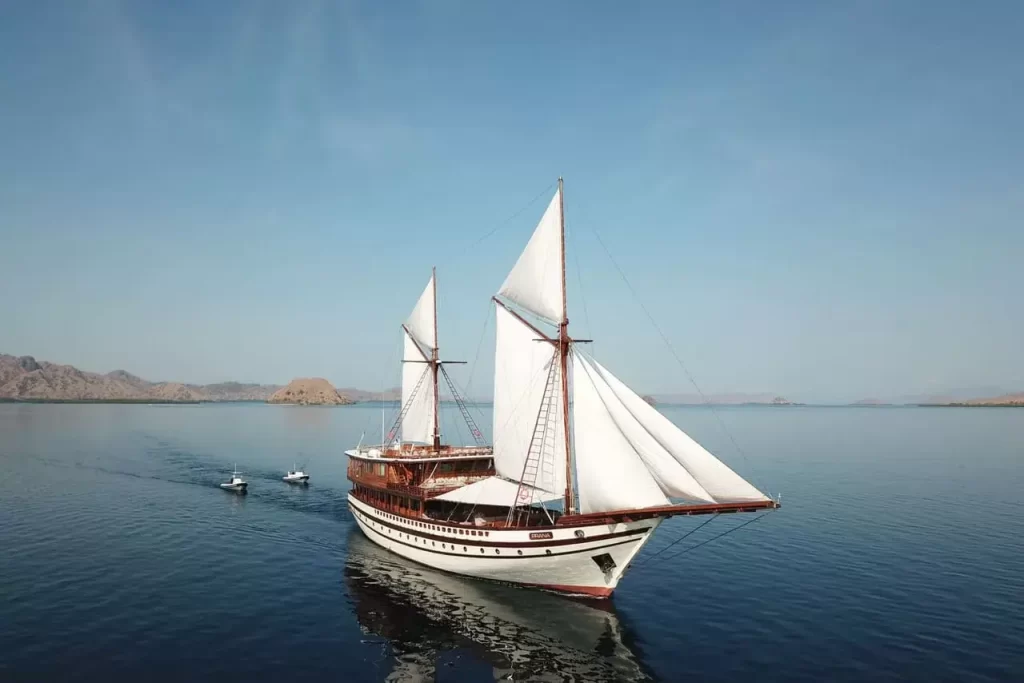
Lately, trips on phinisi boats in Labuan Bajo have been gaining a lot of attention. Sailing trips and liveaboard experiences have become popular choices for travelers who want to enjoy Indonesia’s sea up close. With this growing interest, concerns about safety at sea are also rising—especially for those going on a boat for the first time.
Many tourists still judge safety by how a boat looks—big, clean, or luxurious. But the sea isn’t like traveling on land. Every waterway has its own character, currents, and risks, so safety can’t be judged just by what you see on the surface.
In this article, we want to give a clear and complete understanding of sailing safety in Komodo, based on the perspective of our captains, who have over 10 years of experience in the waters around Labuan Bajo. We believe transparency and safety education are key to a safe and responsible sailing experience.
Safety at Sea Isn’t About Luck
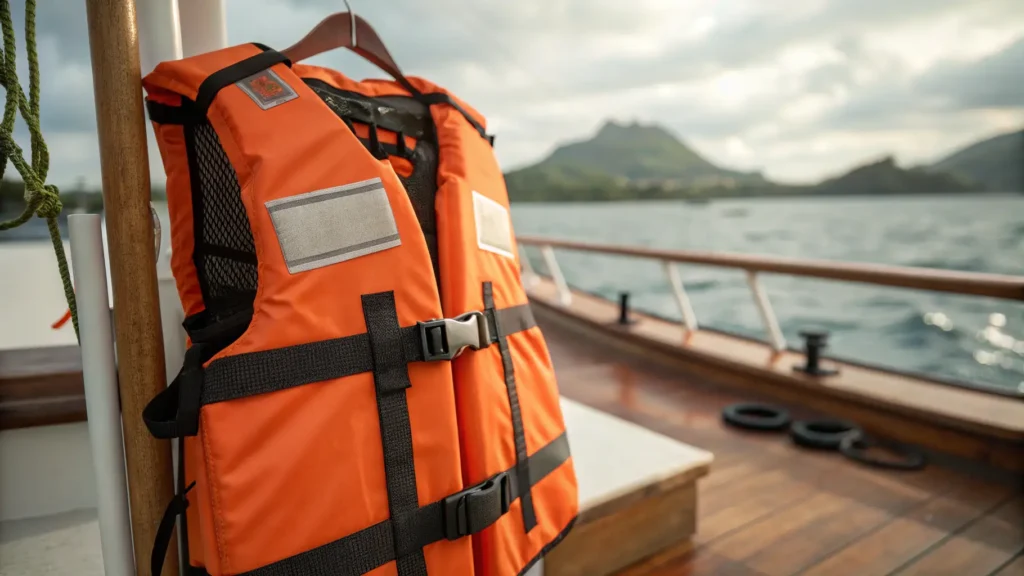
Being safe at sea isn’t about “luck.” It comes from a system that is designed well and run with discipline. From choosing the right boat that meets standards, regular maintenance, to safety equipment onboard—everything is part of a chain of interconnected decisions.
The captain and crew play the most important role in this system. A captain isn’t just someone who drives the boat; they are the top decision-maker—deciding when the boat is safe to sail, how to read the weather, and when to delay or change plans for safety. These decisions are made long before the boat leaves the dock and continue throughout the trip.
Almost all incidents at sea can be explained logically if we look at the process: what was prepared, what was decided, what was ignored, and what was forced. The sea doesn’t choose victims randomly—risks appear when there are gaps in the safety system.
By understanding that safety comes from a system, experience, and making the right decisions at the right time, travelers don’t need to be overly afraid of the sea. What’s more important is making sure the trip is managed professionally, responsibly, and with safety as the top priority from the start.
What Really Causes Tourist Boats to Sink?
In most cases, a tourist boat doesn’t sink because of a single factor. Sinking usually results from a chain of events—small issues that grow when sea conditions aren’t ideal.
1. Weather and Human Decisions
Bad weather doesn’t automatically make a boat sink. Heavy rain, strong winds, and high waves are natural parts of Indonesia’s sea. Risk increases when the trip is forced to continue or when the boat’s route and speed are not adjusted according to the sea conditions.
Here, weather acts as a trigger, not the main cause. The key factor is how humans make decisions in response to changing conditions.
2. Technical Problems in Tough Conditions
Technical issues might not be noticeable when the sea is calm. A weakening engine, inefficient water pumps, or worn support systems might still work under normal conditions.
But when the sea gets rough, these problems can escalate quickly. Something minor in calm water can become critical under pressure.
3. Losing Control of the Boat
If the engine fails or becomes unresponsive, the boat loses its ability to maneuver. At this point, the captain no longer fully controls the direction or stability of the boat. Currents and waves take over, greatly increasing risk—especially in open water or strong currents.
4. Water Accumulation and Loss of Stability
Water usually enters the boat gradually. Over time, the boat’s weight increases, balance shifts, and the boat may start to tilt. Its ability to recover decreases.
If this isn’t handled quickly, the process can eventually lead to the boat sinking.
Key Point:
Boats don’t sink suddenly. There’s almost always a gradual process—decisions made, systems under stress, early warning signs ignored.
Understanding this helps travelers avoid unnecessary fear. Risks are not meant to be completely avoided—they exist to be understood and managed through good safety systems and wise decisions.
Risk Factors in Tourist Sailing
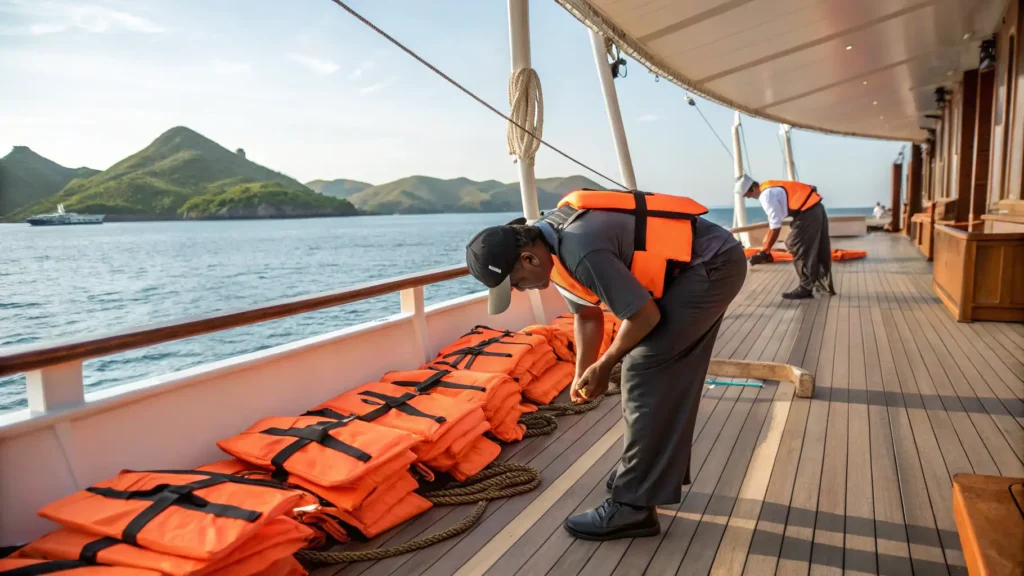
The right way to talk about safety isn’t by focusing on a single incident, but by looking at all risk factors together.
1. Decision-Making at Sea
On a boat, the captain is the top decision-maker. But crucial decisions don’t only happen before departure—they mostly happen during the trip.
Sea conditions can change quickly. Currents can get stronger, wind directions can shift, and waves can come from unexpected sides. Risks increase when decisions aren’t adjusted to these changes—like keeping the same speed, sticking to the original route, or forcing the schedule without considering the latest conditions.
This is where a captain’s experience matters. An experienced captain doesn’t rely only on navigation tools or weather forecasts but also reads the sea firsthand. Understanding local currents, wave patterns, and typical conditions—like those in Komodo—allows the captain to assess the situation accurately and make safe choices.
Safety at sea depends on the ability to read conditions, analyze risks, and have the courage to adjust plans to protect everyone on board.
2. Technical Readiness of the Boat
Just because a boat “works” doesn’t mean it’s truly seaworthy. Many tourists don’t realize this difference. A seaworthy boat is technically prepared to handle various sea conditions, not just calm situations.
A seaworthy boat should:
- Be maintained regularly
- Have engines in good condition
- Have a hull, water pumps, and other support systems functioning properly
This readiness isn’t always visible. A boat can look clean, tidy, and impressive, while its engine or internal systems aren’t in optimal condition. Pre-departure technical checks are crucial. Every boat must undergo inspection and receive safety certification and sailing permission from the port authority (Syahbandar), which ensures it meets safety standards, has proper emergency equipment, and is allowed to sail given the current weather.
Without proper technical readiness—or official permission—the boat shouldn’t sail. That’s why safety isn’t about looks but about systems, maintenance, and following regulations.
3. Environmental Factors in Indonesian Waters
Indonesia’s waters are unique. Many areas have:
- Strong currents
- Narrow straits
- Intersecting currents from different directions
- Rapidly changing conditions
Every region has different characteristics—Komodo isn’t the same as Raja Ampat, Banda differs from the Thousand Islands. Understanding local waters is an important factor often overlooked by tourists.
Read more: Safety Tips for Sailing Trips in Labuan Bajo for Families 2026
Common Mistakes in Judging Boat Safety
Many people have assumptions about tourist boats, but they aren’t always accurate. Common mistakes include:
- Thinking bigger boats are always safer
- Believing modern navigation tools guarantee safety
- Assuming weather is the only risk factor
- Ignoring the role of the captain, crew, and onboard systems
In reality, safety is a result of many combined factors. A well-maintained boat, experienced captain and crew, organized onboard systems, and understanding of the environment all work together. Understanding this helps travelers see safety realistically, without excessive fear.
Role of Crew and Onboard Systems
Safety isn’t only the captain’s responsibility. The crew plays an important role in making sure decisions are executed properly.
Safety at sea is teamwork:
- Communication between crew members
- Clear task assignments
- Preparedness for changing conditions
In tough situations, clear commands and coordinated responses are crucial. Trained crew help maintain order, guide passengers, and ensure safety procedures are followed.
Safety Standards Every Tourist Should Know
Beyond technical readiness and experienced crew, travelers should know the basic safety standards every tourist boat must have. These standards are part of a safety system that ensures the trip remains safe even if the sea changes.
Basic safety standards include:
- Life jackets for all passengers and crew, with the right sizes and easy access
- Life rafts ready for emergencies, with clear evacuation procedures
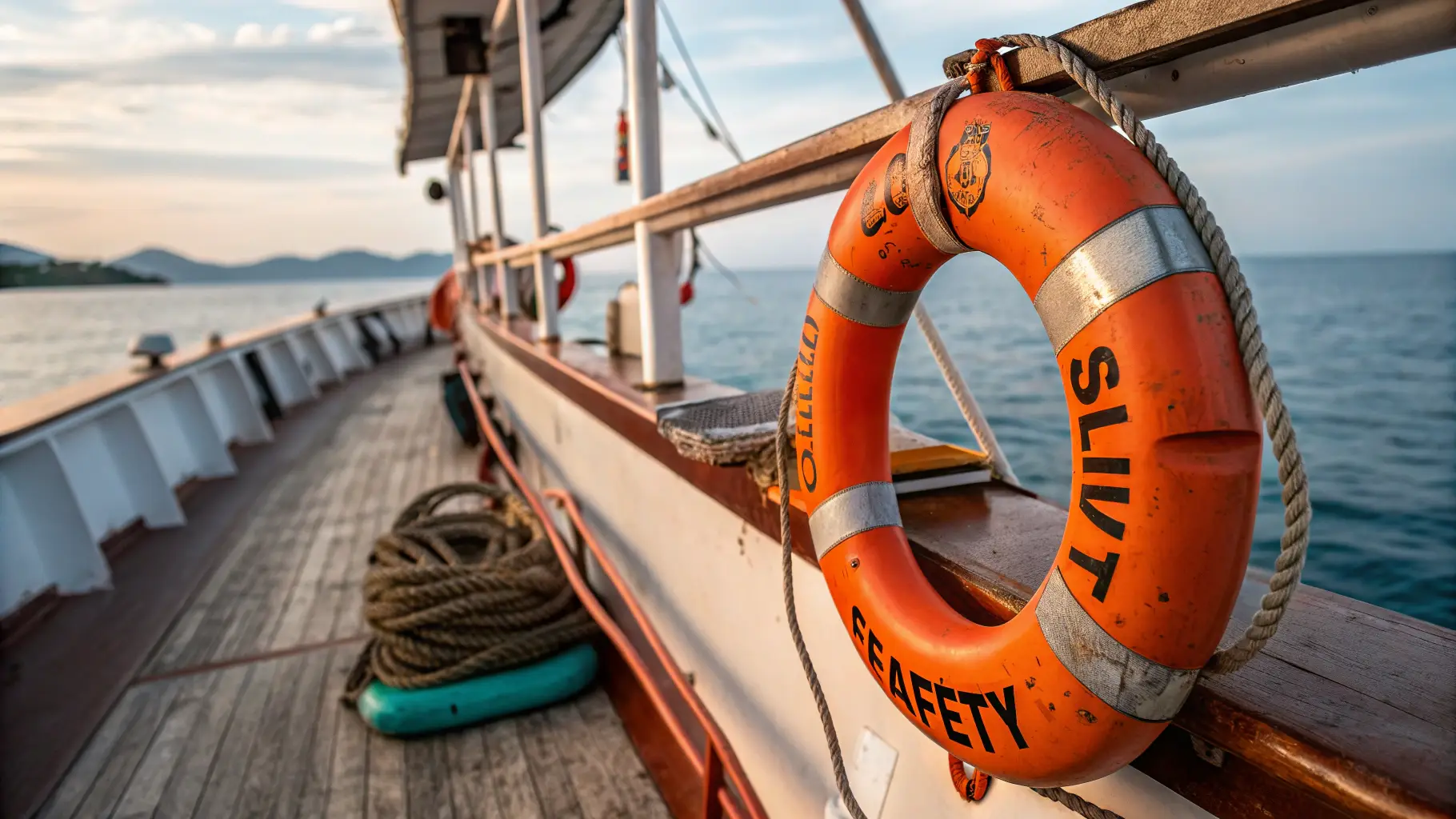
- Additional safety equipment, like buoys, fire extinguishers, and complete first-aid kits, including emergency oxygen if needed
- Sailing permission from the port authority, confirming the boat meets safety standards, has certified crew and captain, and is ready given the current weather
- Experienced and certified captains and crew who can make decisions, read the sea, and respond correctly to emergencies
It’s important to note: sailing permission is important, but not the only safety indicator. Decisions made by the captain and crew during the trip remain the main factor in keeping everyone safe.
Understanding these standards allows travelers to sail with peace of mind, knowing safety is the result of proper systems, equipment, and professional crew.
How Travelers Can Make Smarter Choices
Travelers have the right—and should—be critical before joining a trip. Asking about safety is not just okay, it’s essential for a safe and comfortable sailing experience. Important things to check include:
- Safety procedures onboard: Make sure the boat has basic safety standards, like life jackets, life rafts, fire extinguishers, first-aid kits, and clear evacuation procedures
- Experienced local captain and crew: Certified and experienced captains and crew can read the sea, make the right decisions, and respond quickly in emergencies
- Handling of weather changes: Ask how operators respond to bad weather or high waves. Do they delay departure or change the route if needed for safety?
Travelers should understand that delays or changes aren’t signs of unprofessionalism—they show that passenger safety comes first.
Choosing an operator transparent about safety is part of responsible travel. Open operators will share full information about safety procedures, boat maintenance, crew certification, and emergency plans. This transparency builds trust and helps travelers make smart decisions, enjoying their trip with peace of mind.
Read more: Tips for Choosing a Trusted Travel Agent in Labuan Bajo 2026
Safety and Comfort on Every Trip
At IndonesiaJuara Trip, safety is always our top priority on every sea journey. All our boats are regularly maintained, and our captains and crew are experienced and certified. They understand Indonesian waters and make the right decisions according to conditions.
Before sailing, we make sure all boat systems and safety equipment work properly. Every trip is planned with weather, boat readiness, and passenger comfort in mind. If adjustments to the route or delays are needed, they are done for safety and your peace of mind.
With a better understanding, fear can be replaced with knowledge, and decisions can be made wisely. Sea trips do have risks, but risks aren’t meant to scare—they are meant to be understood and managed. Sail with open eyes, enough information, and trust in the right system.
With IndonesiaJuara Trip, you can enjoy a safe, comfortable, and fun sailing experience, knowing every detail is carefully planned. At sea, safety isn’t about courage—it’s about wisdom. Our team is ready to help plan your next sea adventure safely and memorably.