How to Get to Waerebo Village from Labuan Bajo? Find Out Here!
Waerebo Village | IndonesiaJuara Trip
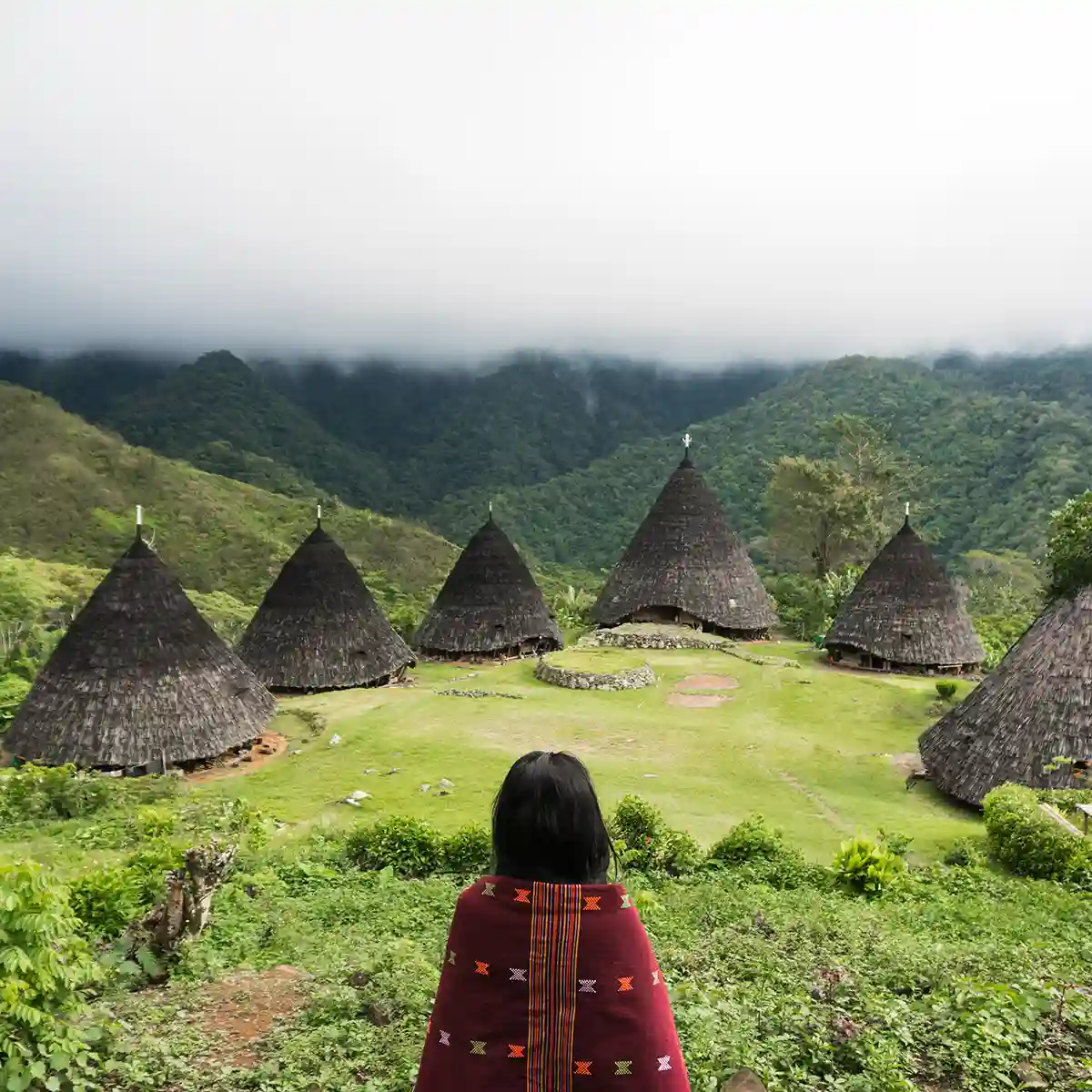
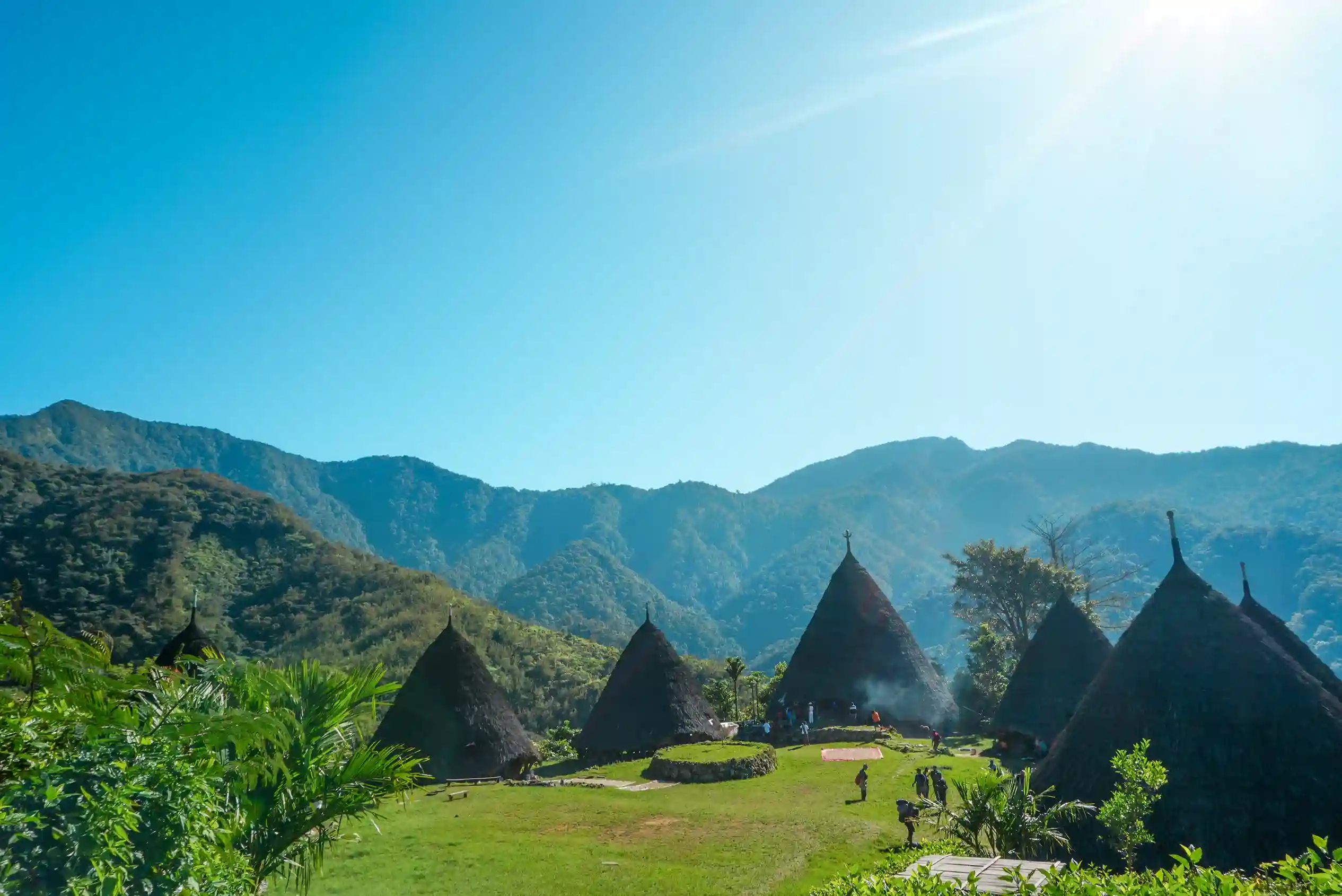
If you’re looking for a different kind of experience in Flores, chances are you’ll come across Waerebo Village as one of the most iconic destinations. Nestled in a remote mountainous area, this village offers not only stunning visual beauty but also an authentic cultural experience that is rarely found elsewhere.
So the question is, how to get to Waerebo Village from Labuan Bajo in the most proper, comfortable way while still respecting the local environment and culture? The answer isn’t as simple as a single direct trip. This article will walk you through the journey in a complete and practical way, covering travel routes, transportation options, time estimates, and important tips you need to know before heading to Wae Rebo.
Table of Contents
Key Takeaways
- Getting to Waerebo Village from Labuan Bajo involves a combination of a 5–7 hour overland journey to Dintor (Wae Lomba), followed by a 2–3 hour trek through forest trails.
- The Dintor (Wae Lomba) route is the most commonly used because it is shorter and has clear checkpoints (Pos 1–5) that make the journey easier to navigate.
- A trip to Waerebo is not just about reaching a destination, but a complete experience that combines overland travel across Flores, trekking, and meaningful cultural interaction with the local community.
- Upon arrival at the village, you are required to follow traditional procedures such as registration and the Waelu’u welcoming ceremony as a sign of respect to the local community.
- Proper physical preparation, the right gear, and joining a trip with a trusted operator like IndonesiaJuara Trip will make your journey safer, more comfortable, and well-organized.
Why Should You Visit Wae Rebo Village?
You should visit Wae Rebo Village because it offers an experience that is not only visually beautiful but also rich in authentic cultural values. Here, you don’t just see the scenery, you truly experience the life of an indigenous community that still preserves its traditions and harmony with nature. On top of that, the journey to reach the village itself becomes part of the experience, making it feel even more meaningful.
Here are several reasons why Waerebo deserves a spot on your bucket list:
- Authentic and rare cultural experience
You will stay directly in traditional houses alongside the local community and take part in traditions that are still practiced today. This gives you a much deeper experience compared to simply visiting a typical tourist destination. - The untouched natural beauty of Flores’ mountains
Waerebo Village is surrounded by tropical forests and mountains, creating a peaceful and serene atmosphere. The scenery feels exclusive because it has not been heavily impacted by mass tourism development. - Challenging yet rewarding trekking experience
The journey to Waerebo requires effort, but that’s exactly what makes it special. Every step you take will feel worth it once you finally see the village from above. - A chance for a digital detox
Limited signal in Waerebo allows you to truly disconnect from digital distractions. It’s the perfect moment to enjoy your time more mindfully and reconnect with nature. - Supporting sustainable tourism and local communities
By visiting Waerebo responsibly, you contribute to preserving the local culture and supporting the community’s economy. This aligns with the growing importance of sustainable and eco-friendly travel.
How to Get to Waerebo Village from Labuan Bajo?
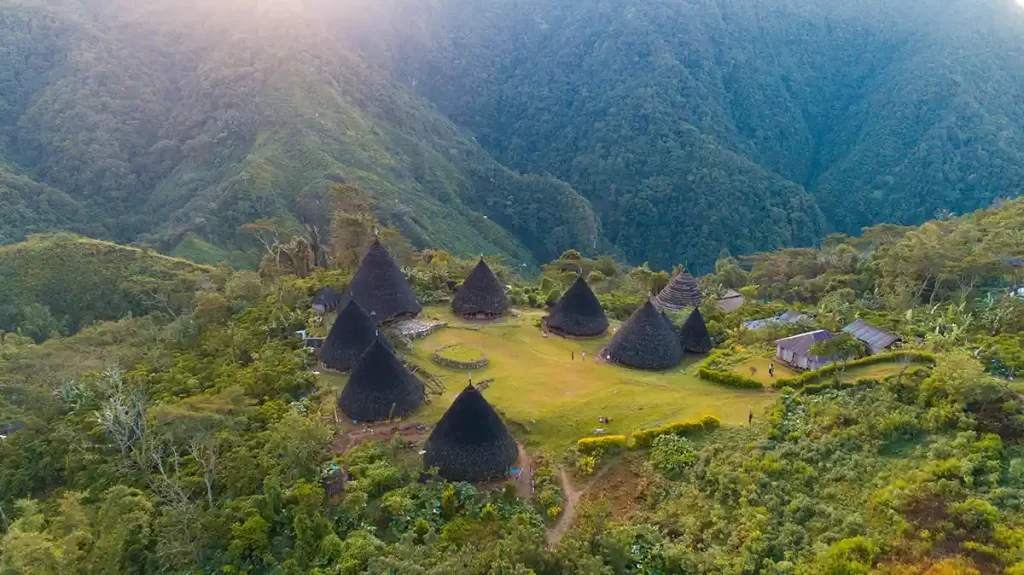
Getting to Waerebo Village from Labuan Bajo involves a combination of overland travel and trekking that cannot be separated. The journey is quite long, but each stage offers a different experience, from the diverse landscapes of Flores to the still-pristine forest trails. Precisely because the access is not instant, Waerebo feels more exclusive and authentic compared to other destinations.
Here are the stages you need to go through to reach Wae Rebo Village from Labuan Bajo:
1. Overland Journey to Dintor or Denge Village
The journey begins from Labuan Bajo to the southern coastal area of Flores, either Dintor or Denge Village, usually passing through Lembor. The distance is around 110–130 km, with a travel time of approximately 5 to 7 hours depending on road conditions, weather, and the type of vehicle used. Since the route is winding with varying elevations, this trip is best done using a private car or a vehicle with an experienced driver.
Along the way, you’ll pass through a variety of landscapes, such as:
- the green rolling hills typical of Flores
- vast rice fields in Lembor
- ocean views as you get closer to Dintor
It’s important to note that facilities such as rest areas, ATMs, or modern minimarkets are still limited along this route. Therefore, it’s recommended to:
- bring enough cash
- buy essentials before departure
- ensure your vehicle is in good condition
Currently, the route to Dintor (Wae Lomba) is the most commonly used access point because it is shorter and makes the trekking time more efficient compared to the older route through Denge Village.
2. Determining the Trekking Starting Point
Upon arriving in the Dintor area, the journey continues to the trekking starting point at Wae Lomba. This location serves as the main access to Waerebo because the trail is clearer and more frequently used by both travelers and local guides. Usually, you will also complete an initial registration or coordinate with a guide before starting the trek.
As a comparison:
- Dintor (Wae Lomba) → approximately 2–3 hours of trekking, more commonly used route
- Denge → longer trekking time, older route that is now rarely used
At this point, you can also take a short break before the trek begins. Some travelers choose to have lunch first or prepare essentials such as drinking water, a raincoat, and trekking poles if needed.
3. Trekking to Waerebo Village
If you take the Dintor (Wae Lomba) route, which is currently the most common path, you will pass several checkpoints before arriving at Waerebo Village. From the starting point, the journey continues on foot for about 2 to 3 hours through tropical forest trails. The path is dominated by uphill sections, with some fairly steep parts, so it requires a reasonable level of stamina, especially if you are not used to trekking. Even so, the trail is quite clear and frequently used, making it relatively safe as long as you stay cautious.
During the trek, you will pass several rest points known as “pos.” These checkpoints are typically used for short breaks and also serve as markers of your trekking progress.
In general, the route to Waerebo consists of:
- Pos 1 → the start of the trek, with a gentle uphill path from local farmland
- Pos 2 → entering the forest, with a more shaded trail
- Pos 3 → a common resting area as the terrain starts to feel more demanding
- Pos 4 → steeper climbs with more physically challenging sections
- Pos 5 → the final point before the village, often used to catch your breath
As you move higher, the atmosphere becomes cooler and quieter. The vegetation becomes denser, and the air feels fresher compared to the lower areas. The trail conditions can also vary:
- compact soil during dry conditions
- slippery and muddy during rain
- some rocky and narrow sections
Even though the trek can be physically demanding, this is where the core experience lies. There are no vehicle noises or crowds, only the sounds of nature accompanying each step. Many travelers consider this part the highlight because it allows them to fully enjoy the journey in a more personal and peaceful way. Once you arrive at Waerebo, you will be welcomed by the sight of a traditional village nestled in a valley surrounded by mountains. At this point, the fatigue from the journey usually fades away, replaced by a feeling that is hard to put into words.
Entry Procedure to Waerebo Village
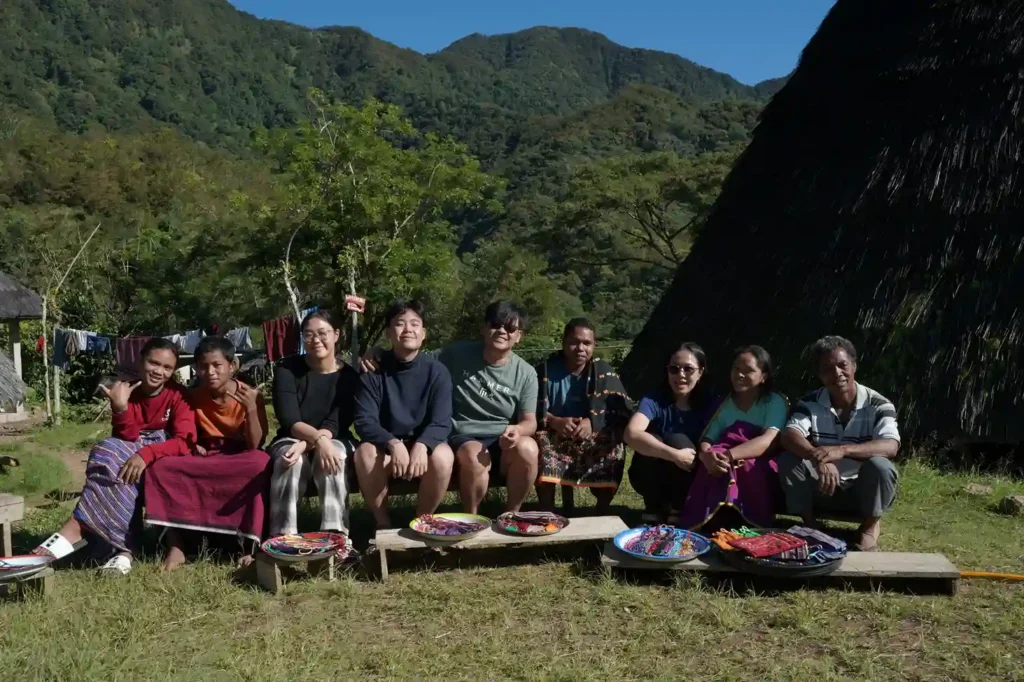
Upon arrival in Wae Rebo Village, you cannot simply enter or explore freely. As a traditional village that strongly upholds its customs, every guest is required to follow a welcoming procedure that has been passed down through generations. This process is not just a formality but a sign of respect to the ancestors and the local community.
Here are the steps you will typically go through upon arrival:
1. Arrival Registration and Reporting to Village Elders
Once you reach the village area, you will be directed to gather in the main traditional house called Mbaru Niang. Here, a local guide will usually assist you in registering as a visiting guest. Beyond recording your details, this process also serves as a way of formally “reporting” your presence to the village elders or representatives. This is important because, in Waerebo culture, every guest must be officially received before engaging in activities within the village.
2. Traditional Welcoming Ceremony (Waelu’u)
After registration, you will take part in a welcoming ceremony known as Waelu’u. This ceremony is usually led by a village elder and takes place inside the main traditional house.
During this process:
- the elder will offer prayers or words of welcome
- you, as a guest, will be symbolically “introduced”
- you will briefly state the purpose of your visit
Although simple, this ceremony carries deep meaning. It is how the people of Waerebo accept you, not just as a tourist, but as a guest.
3. Explanation of Rules and Etiquette in the Village
After the welcoming ceremony, you will receive a brief explanation of the rules you must follow during your stay in Waerebo. This is important to maintain mutual comfort and to preserve the existing culture.
Some of the common guidelines include:
- maintaining respectful behavior at all times
- not damaging the environment or facilities
- following instructions from guides or local residents
- keeping the area clean and not littering
In some cases, you will also be informed about areas that are accessible and those that are restricted.
4. Accommodation in Traditional Houses
If you stay overnight, you will be accommodated inside a traditional house along with other guests. Accommodation in Waerebo is simple, usually consisting of mats or basic bedding provided by the locals. Despite its simplicity, this experience becomes one of the highlights because you get to directly experience the local way of life. It’s also a great opportunity to interact closely with the community and understand their daily routines.
5. Contribution or Customary Fee
As part of your visit, there is usually a contribution fee that needs to be paid by visitors. This fee is used to:
- support village operations
- preserve the traditional houses
- help meet the needs of the local community
The amount may vary depending on the latest policy, but it is generally already included if you join an open trip or private trip to Waerebo.
Read more: Eco-Friendly Travel in Indonesia: Sustainable Ways to Explore Nature
Important Tips to Make Your Trip to Waerebo More Comfortable
To ensure your trip to Waerebo goes smoothly, there are several important things you should prepare in advance. Considering the challenging access and remote location, proper preparation will greatly help maintain your comfort throughout the journey.
Here are some important tips to keep in mind:
- Prepare your physical condition well
The trek to Waerebo is dominated by uphill trails that can be physically demanding, especially if you’re not used to hiking. Being in good physical condition will help you maintain a steady pace and reduce the risk of fatigue along the way. - Wear proper trekking shoes
The trail to Waerebo can be slippery, especially during the rainy season, so shoes with good grip are essential. Comfortable footwear will also help you maintain balance and reduce the risk of slipping. - Pack only what you need
Since you’ll be walking for several hours, carrying excessive weight will only make the journey more difficult. Focus on essential items such as drinking water, a jacket, personal medication, and other basic necessities. - Respect local customs and culture
Waerebo is a living traditional village, so it’s important to behave respectfully and follow local rules. By respecting the culture, you become not just a visitor, but a welcomed guest. - Join a trip with a trusted tour operator
Considering the long journey and multiple stages involved, joining a trip with a local operator can make everything much more practical and well-organized. For example, with IndonesiaJuara Trip, your trip usually includes transportation, experienced local guides, and logistical arrangements, allowing you to focus on enjoying the journey without worrying about the technical details.
Experience a Hassle-Free Trip to Wae Rebo with IndonesiaJuara Trip!
The journey to Wae Rebo from Labuan Bajo does require effort, starting with a 5–7 hour overland trip to Dintor followed by a 2–3 hour trek through tropical forest with several rest posts along the way. Each stage is not just about getting from one place to another, but about experiencing something different, from the diverse landscapes of Flores to the calm and authentic atmosphere of the forest. Once you arrive at the village, you will also take part in traditional ceremonies as a form of respect before fully immersing yourself in life at Wae Rebo. This is what makes the journey feel like more than just a regular trip, but a complete and meaningful travel experience.
If you want to enjoy the entire process without the hassle of managing logistics and technical details, you can consider joining a trip with IndonesiaJuara Trip. With a well-organized itinerary, you’ll be accompanied by experienced local guides who understand the routes, culture, and traditional procedures in Wae Rebo, making your journey safer and more comfortable. In addition, everything from transportation and accommodation to on-site coordination is carefully arranged, allowing you to focus on enjoying every moment of your trip.
Contact our team now and book a private trip Wae Rebo with IndonesiaJuara Trip for a more practical and memorable experience.