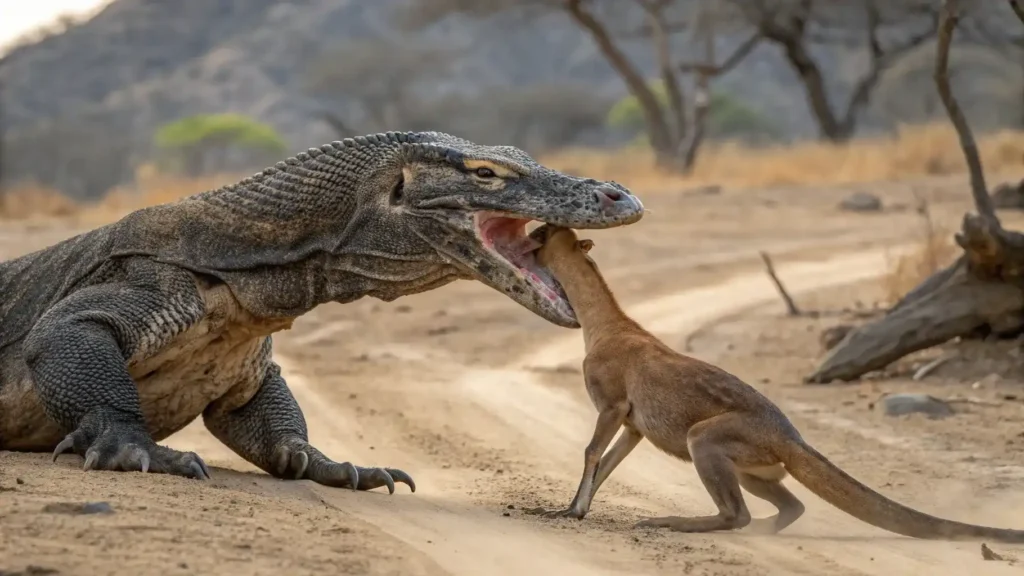
If you’ve ever wondered how do Komodo dragons hunt their prey, you’re not alone. Komodo dragons, the giant reptiles found only on Komodo Island and its surroundings, have a unique and highly strategic hunting method. But have you ever thought about how they manage to overpower prey that is faster or even larger than their own body? It turns out they have specific stages and techniques that make every movement highly effective. This article will cover everything about how Komodo dragons hunt their prey, so keep reading until the end!
Table of Contents
Key Takeaways
- What is the main prey of Komodo dragons?
Komodo dragons mainly hunt medium to large-sized animals such as Timor deer, wild boar, and sometimes small goats or cattle, while younger Komodos usually target smaller animals like mice, birds, or lizards. - When are Komodo dragons most active in hunting?
They are primarily active in the early morning and late afternoon when temperatures are cooler, while during midday they tend to rest to conserve energy. - How do Komodo dragons hunt their prey?
They employ clever strategies: detecting prey from a distance, stalking, ambushing quickly, biting with venomous saliva, and waiting for the prey to weaken before consuming it. - How can you safely observe Komodo dragons?
You can stay safe by following a local guide, maintaining a safe distance, moving slowly, using binoculars or a camera, and joining tours with reputable operators like IndonesiaJuara Trip.
What is the Main Prey of Komodo Dragons?
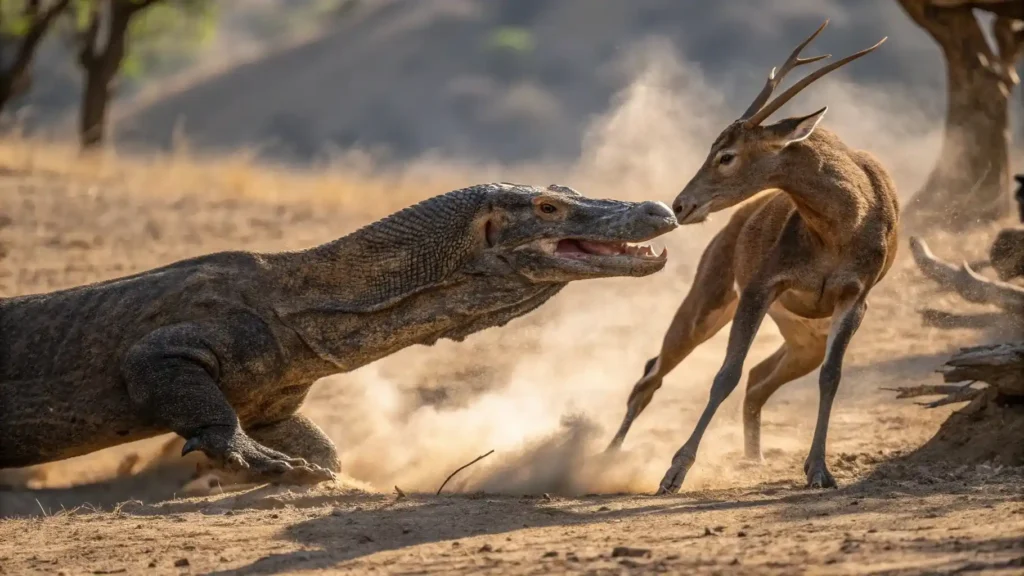
The main prey of Komodo dragons includes medium to large animals such as Timor deer, which are large enough to provide a substantial meal yet still possible to hunt, slow-moving wild boars, and occasionally small goats or cattle near human settlements. However, their diet also varies depending on the age and size of the Komodo itself. Young or smaller Komodos usually hunt smaller animals like lizards, mice, birds, or eggs because they aren’t strong enough to tackle larger prey. Adult Komodos, with bigger bodies and stronger jaws, can take down much larger animals, even prey the size of adult deer.
As apex predators, Komodo dragons are also opportunistic. They do not hesitate to scavenge carcasses or prey on injured animals to conserve energy. This flexibility in feeding allows them to survive in habitats where food resources are not always abundant. Understanding the main prey of Komodos is not just about the type of animal but also about how their age, size, and condition influence their hunting strategies.
When Are Komodo Dragons Most Active in Hunting?
Komodo dragons are primarily active in hunting during the early morning and late afternoon when temperatures are cooler, and environmental conditions support their hunting strategies. Here’s the breakdown:
- Morning: Komodos start moving to search for prey when the sun isn’t too hot. This timing is strategic because prey animals are also beginning their activity, increasing the chances of encounters. They use the cool morning air and humidity to detect prey more effectively.
- Midday: Hunting activity decreases due to high temperatures. Komodos tend to rest or bask in shaded areas to conserve energy and maintain body temperature, though they remain alert for passing prey.
- Late afternoon to early evening: Hunting activity increases again as temperatures drop and winds calm. This allows Komodos to approach prey more safely and stealthily. The evening light also helps them ambush animals sensitive to movement.
Other factors like prey availability, terrain, and humidity also influence hunting times. Therefore, morning and late afternoon are the best times to observe them in natural hunting activity.
How Do Komodo Dragons Hunt Their Prey?
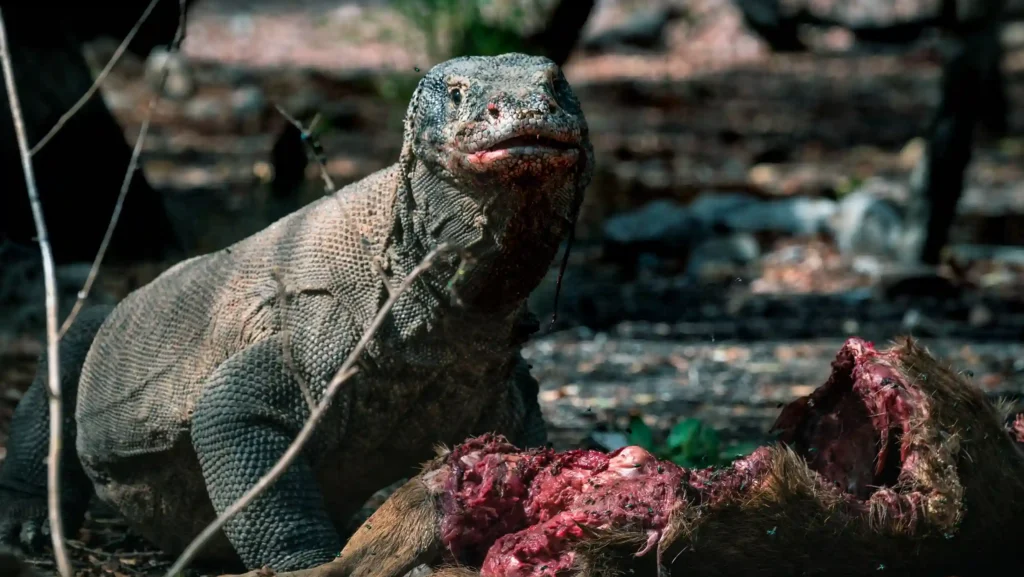
Hunting for Komodo dragons is not just about chasing prey quickly; they use clever strategies that have proven to be very effective. Here are the steps Komodos usually take when hunting:
Komodo Detecting Prey from a Distance
The first stage in a Komodo’s hunt is detecting prey from afar, and they rely heavily on their sharp sense of smell. To do this, they flick their long, forked tongue into the air to pick up scent particles from the prey. These particles are then processed by the Jacobson’s organ on the roof of their mouth, allowing the Komodo to accurately determine the direction and distance of its target. In addition to smell, their eyesight also helps them read the movements of nearby animals, making their hunting plan more precise. With this combination of smell and vision, Komodos can start strategizing their hunt even before approaching the prey.
Komodo Ambushing Prey Quickly
After the scouting stage, Komodo dragons will ambush their prey swiftly when the moment is right. They usually approach from the side or behind, using bushes, rocks, or terrain contours as camouflage so their movement is less noticeable. By assessing the distance and speed of their prey beforehand, they can determine the most effective moment to strike. The attack is sudden and fast, often giving the prey no chance to react. This ambush strategy shows that Komodos are not just large predators but also incredibly patient and intelligent hunters.
Komodo Biting Prey with a Venomous Bite
Once the ambush succeeds, the Komodo will bite the prey as the next step in its hunting strategy. This bite does not always kill immediately; it usually wounds the prey while injecting venom and bacteria that gradually weaken it. The venom and bacteria work together to drain the prey’s energy, so the Komodo doesn’t have to chase for long. Their strong jaws also help hold onto the prey during the attack, ensuring the bite is effective. This method allows Komodos to conserve energy while increasing their chances of a successful hunt.
Komodo Waiting for the Prey to Weaken Before Eating
After biting, Komodos often wait for their prey to weaken before actually consuming it. The venom and bacteria introduced into the prey’s body gradually sap its strength. Komodos monitor from a close distance, or sometimes step back briefly to make sure the prey doesn’t escape or get attacked by other predators. Once the prey becomes powerless, the Komodo approaches again and starts eating, usually beginning with the most accessible parts. This waiting strategy demonstrates that patience and careful tactics are just as important as physical strength for this ancient predator.
Read more: How Can We Protect Komodo Dragons? Find Out Here!
Tips for Safely Observing Komodo Dragons
After understanding how Komodo dragons hunt, you probably also want to observe these ancient predators safely. To make your experience enjoyable without putting yourself at risk, here are some safe tips for seeing komodos:
- Follow a Local Guide
Local guides know Komodo behavior and the safe areas for observation. By following them, you can stay close to Komodos without disturbing them or putting yourself in danger. - Keep a Safe Distance
Always maintain at least 3–5 meters from the Komodo, as sudden movements can trigger an attack. Keeping your distance allows you to observe their natural behavior safely. - Avoid Sudden Movements and Loud Noises
Komodos are sensitive to motion and sounds around them. Walking slowly and speaking softly will help you observe them without causing stress. - Do Not Feed Them
Feeding can alter a Komodo’s natural behavior and make them more aggressive. Let them hunt on their own to stay safe and enjoy a more authentic experience. - Use a Camera or Binoculars from a Safe Distance
Instead of approaching too closely, use a camera with a zoom lens or binoculars. This way, you can capture interesting moments without disturbing the Komodo. - Join a Trip with an Experienced Tour Operator
Observing Komodos is much safer and more enjoyable when you join a trip with professional guides. For example, IndonesiaJuara Trip ensures you can see Komodos up close safely while also learning a lot about their fascinating behavior.
Read more: When Is the Best Time to See Komodo Dragons? Must-Know Info for Travelers!
See Komodo Dragons Up Close with IndonesiaJuara Trip!
After seeing the entire Komodo hunting process, from detecting prey from a distance, patiently stalking, ambushing swiftly, biting with venom, to waiting for the prey to weaken before consuming it, it’s clear that Komodos are intelligent and strategic predators. Understanding these steps helps you appreciate their natural behavior and see Komodos not just as large reptiles, but as meticulous ancient predators. If you’re curious and want to witness Komodos up close in their natural habitat, you can join a Labuan Bajo tour with IndonesiaJuara Trip. Our team will ensure your trip is safe, comfortable, and full of exciting experiences while learning a lot about the Komodos’ original habitat in Komodo National Park.